
Bansi Paharpur Sandstone: Colours, Quality, Price and How to Check It
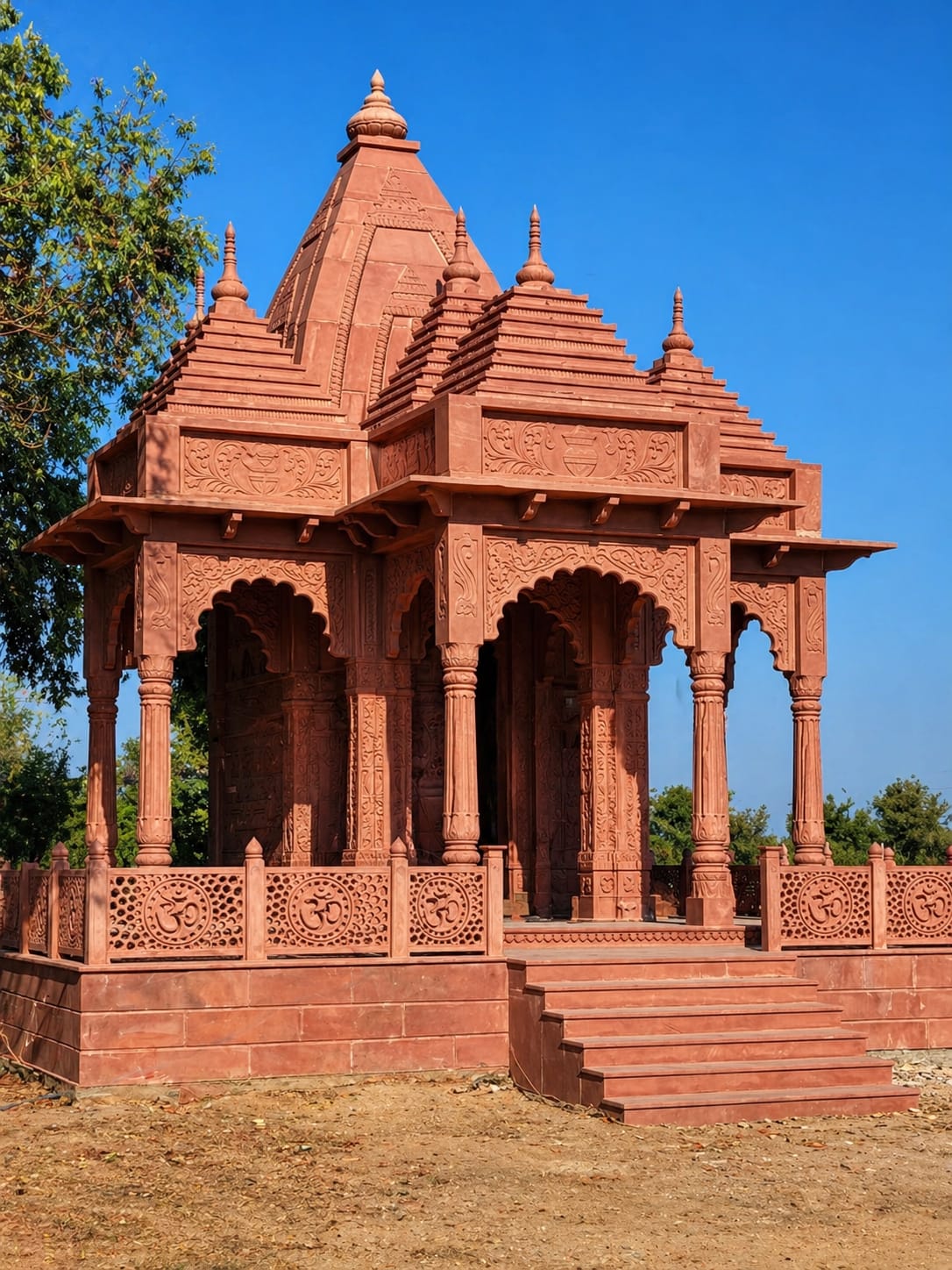
Bansi Paharpur sandstone is a fine-grained pink sandstone that comes from Bansi Paharpur in Bharatpur district, eastern Rajasthan. Carvers prize it because it takes sharp detail and has a soft pink colour that few other stones match. It is not the same as Dholpur sandstone, which comes from a neighbouring district. Because mining at Bansi Paharpur has faced legal limits, you should always ask a supplier to prove where the stone came from. This guide explains what the stone is, how it looks, what it costs and how to check it before you order. We work with Bansi Paharpur pink and Dholpur red sandstone at our workshop in Sikandra, Dausa, so we also say plainly where each one fits. pink Bansi Paharpur sandstone temple by Nancy Stone Articles
What is Bansi Paharpur sandstone?
Bansi Paharpur sandstone is a natural pink to rose-coloured sandstone. Builders use it for temple pillars, domes, jali screens and gateways. Its fine, compact grain lets a carver cut thin bridges and sharp edges without the stone crumbling.
Where does Bansi Paharpur sandstone come from?
The stone takes its name from Bansi Paharpur, a quarrying area in Bharatpur district of Rajasthan. A 2021 report in The Tribune described pink sandstone mined at Bansi Paharpur and sourced for the Ram temple in Ayodhya. Eastern Rajasthan holds several sandstone belts, and the Dholpur, Bharatpur, Karauli and Sawai Madhopur region produces red, pink and cream stone.
Bansi Paharpur vs Dholpur sandstone: they are not the same
Many buyers hear both names used for the same stone, but they are different. Dholpur stone comes from Dholpur district, and the same 2021 Tribune report quoted the Dholpur variety as “no match” for Bansi Paharpur stone. In the market, however, sellers sometimes use the names loosely, so ask which quarry area your stone comes from.
| Point | Bansi Paharpur sandstone | Dholpur sandstone |
|---|---|---|
| Origin | Bansi Paharpur, Bharatpur district | Dholpur district |
| Typical colour | Light pink to deeper rose | Red, white and beige varieties |
| Common use | Fine temple carving, jali, domes | Large outdoor structures, gates, paving |
| Supply | Limited, with mining restrictions reported | Widely available |
red sandstone temple, shown to compare with Bansi Paharpur sandstone

What does Bansi Paharpur sandstone look like?
The colour is the main reason people choose it. However, no two blocks look exactly alike, so it helps to know what to expect.
Pink shades
Most blocks range from pale, almost white-pink to a deeper rose. Some show a faint warm or reddish tone. In daylight the colour looks softer than it does under shop lights, so always view a sample outside.
Natural bands and streaks
Because the stone formed in layers, you may see light streaks, faint bands or small colour patches. These marks are natural, and many people like them. However, strong dark patches or visible cracks are a warning sign, so reject those blocks.
Matching colour across a whole temple
Colour can vary from one lot to the next. For this reason, order all the stone for one temple together, and ask your supplier to match the blocks by shade before carving starts.
Properties of Bansi Paharpur sandstone
Sandstone from this region is fine grained, compact and easy to cut, chisel and polish. As a result, carvers use it for detailed work such as pillars, brackets and jali. Like all natural stone, it also absorbs some water, which is why sealing and good drainage matter outdoors.
Why we do not quote one strength figure
Compressive strength and water absorption change from block to block. Therefore, a single number in a brochure tells you little. Instead, ask the supplier for a test report on the lot you will receive. A recognised laboratory should test compressive strength, water absorption and density using Indian Standard methods for natural building stone.
What is Bansi Paharpur sandstone used for?
- Temple pillars and domes. The fine grain holds detail in carved columns and shikhar.
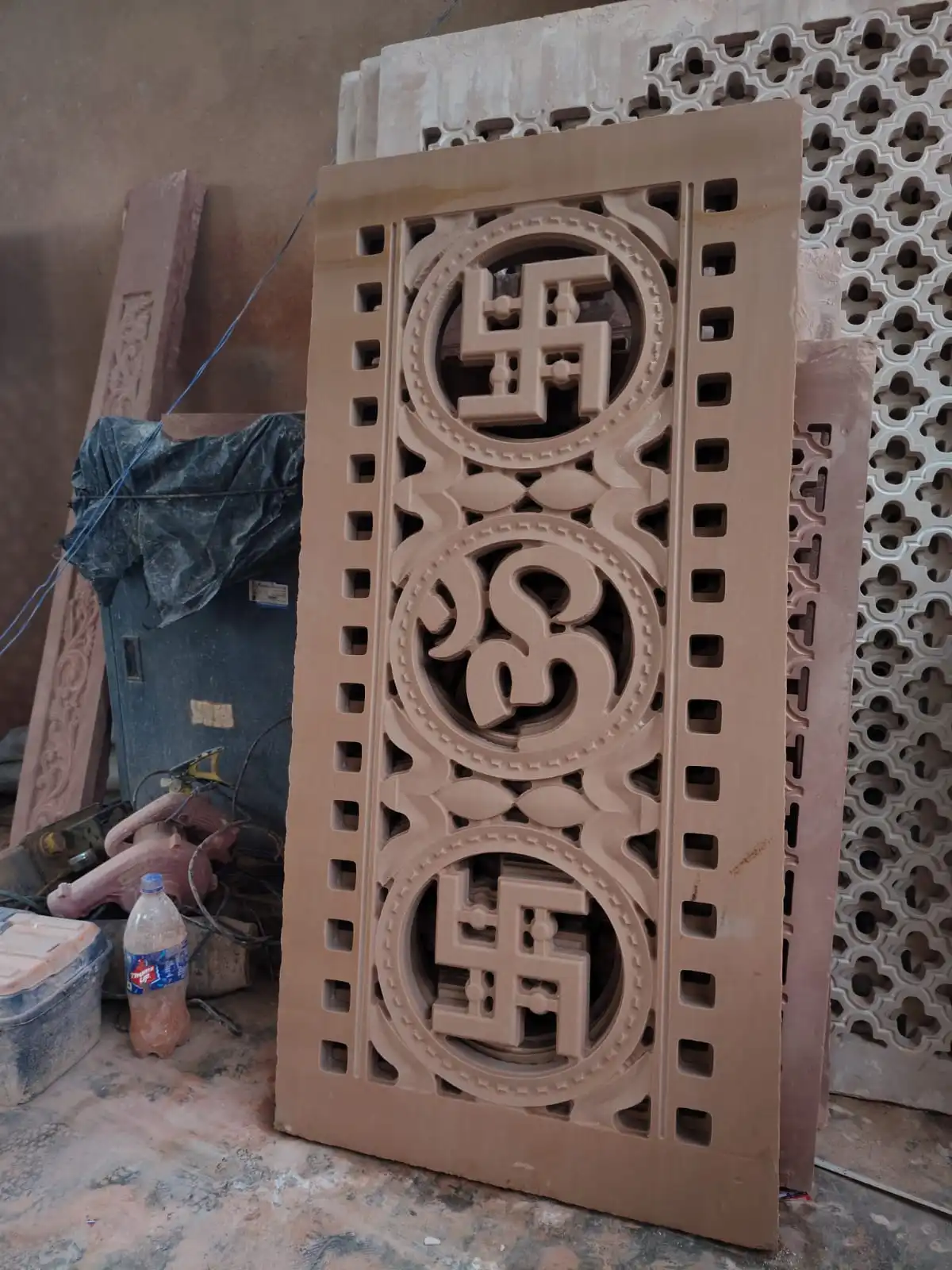
- Jali screens. Thin patterns need a compact stone, and this one cuts cleanly. Our sandstone jali price guide explains the costs.
- Chhatris and gateways. Pavilions and entry gates show off the pink colour in full sunlight.
- Wall panels and brackets. Carved panels, jharokhas and brackets use the same stone for a matching look.
carved sandstone jali, one use of Bansi Paharpur sandstone For help choosing between colours, read our comparison of red and pink sandstone temples.
How much does Bansi Paharpur sandstone cost?
We cannot give one price per block, because cost depends on the shade, block quality, size and carving. However, three things usually push the price up: an even, light pink colour, flawless blocks and heavy carving. Red Dholpur stone often costs less for the same design.
What current listings show
Online supplier listings we reviewed in October 2026 show a wide spread. For example, pink sandstone jali appears at roughly ₹300 to ₹900 per sq ft on IndiaMART. Pink sandstone temples appear from about ₹1.8 lakh for a 9 ft modern temple to ₹3.7 lakh and above for solid carved pink stone, while some large outdoor temples list far higher. Such a gap means you must compare the same size, stone, carving depth and delivery terms. Our guide to sandstone temple price in India shows how we break the cost down.
Mining limits and why proof of origin matters
Bansi Paharpur stone is not freely available everywhere. Reports from 2021 said the main block lies within the Bandh Baretha wildlife sanctuary area, that mining there was banned after 2016, and that illegal mining continued. Authorities seized 25 trucks of illegally mined stone in one action. In February 2021, a national wildlife committee cleared a proposal to free land for mining three blocks, according to The Free Press Journal.
What this means for you
Rules may have changed since those reports, and we have not checked the latest notifications for this article. Therefore, treat origin papers as part of the purchase. Ask your supplier to show the following:
- The quarry or lease the stone came from
- Transport and royalty documents for the stone lot
- A GST invoice with the correct description
- A laboratory test report for the lot
A supplier who answers these calmly and in writing is usually the safer choice. Meanwhile, be careful with any seller who offers a “Bansi Paharpur” price far below the market.
How to check the stone before you order
Follow these seven checks, and you will avoid most problems:
- View the sample outdoors in daylight, not under shop lights.
- Ask for a sample cut from the actual lot, not from a display piece.
- Look closely for hairline cracks, soft veins and dark patches.
- Tap the stone. Many masons say a clean ring suggests sound stone, while a dull sound can point to a hidden crack.
- Compare several blocks side by side for colour match.
- Check the edges and corners of cut pieces for chipping.
- Get the stone type, thickness, quantity and delivery terms in writing.
Caring for Bansi Paharpur sandstone
Natural stone ages slowly, and good care keeps it looking fresh. First, build the temple on a raised base with proper drainage, so water does not stand around the bottom. Next, apply a protective sealer suited to sandstone. After that, brush off dust with a soft brush and wash with mild soap and water. Avoid acid-based cleaners, because they can damage the surface. In the monsoon, remove early moss before it settles into the stone.
Working with us
We make temples, jali, chhatris and custom carving from Bansi Paharpur pink and Dholpur red sandstone at our workshop in Sikandra, Dausa, Rajasthan. Before carving starts, we can show you a sample so you can approve the colour. You can also see finished work on our past projects page and browse our pink sandstone temples. Nancy Stone Articles
21, Agra Rd, Sikandra, Rajasthan 303326
Call or WhatsApp: +91 63756 49667
Frequently asked questions
What is Bansi Paharpur sandstone?
It is a fine-grained pink sandstone from Bansi Paharpur in Bharatpur district, Rajasthan. Carvers use it for temple pillars, domes, jali and gateways because it holds sharp detail.
Where does Bansi Paharpur sandstone come from?
It comes from the Bansi Paharpur area of Bharatpur district in eastern Rajasthan. Reports describe the main block as lying inside the Bandh Baretha wildlife sanctuary area.
Is Bansi Paharpur sandstone the same as Dholpur sandstone?
No. Dholpur stone comes from Dholpur district and usually appears in red, white and beige. Bansi Paharpur stone comes from Bharatpur district and is known for its pink colour. However, some sellers use the names loosely, so ask for the quarry area.
Is Bansi Paharpur sandstone good for temples?
Yes, many builders choose it for temple carving because of its fine grain and soft pink colour. It still needs a raised base, good drainage and sealing to age well outdoors.
Is pink sandstone more expensive than red sandstone?
Often it is, especially when the colour is even and the blocks are flawless. The final price still depends on size, carving depth and transport, so compare quotes for the same design.
How can I check that the stone is genuine?
Ask for a sample from your actual lot, origin and transport papers, a GST invoice and a laboratory test report. Also view the colour in daylight and compare several blocks.
Is mining of Bansi Paharpur sandstone restricted?
Reports from 2021 said mining at the main block was restricted because it lies in a wildlife sanctuary area. Rules may have changed since then, so ask your supplier to show current papers.
Can I see a sample before I order?
Yes. We can show you a sample so you can approve the shade before carving begins. Contact us with your size and design.
Conclusion
Bansi Paharpur sandstone earns its reputation through fine grain and a soft pink colour, but you should still buy it with care. Check the shade in daylight, ask for a lot sample and test report, and insist on origin papers. To discuss a temple or jali in this stone, contact Nancy Stone Articles.
Sources
- The Tribune: Supply of special pink sandstone for Ayodhya’s Ram temple to be eased soon (February 2021)
- The Free Press Journal: Ram temple, govt nod to pink sandstone mining in Rajasthan (February 2021)
- Litos: Indian sandstone, the stone with universal appeal
- IndiaMART: sandstone jali listings (reviewed October 2026)