
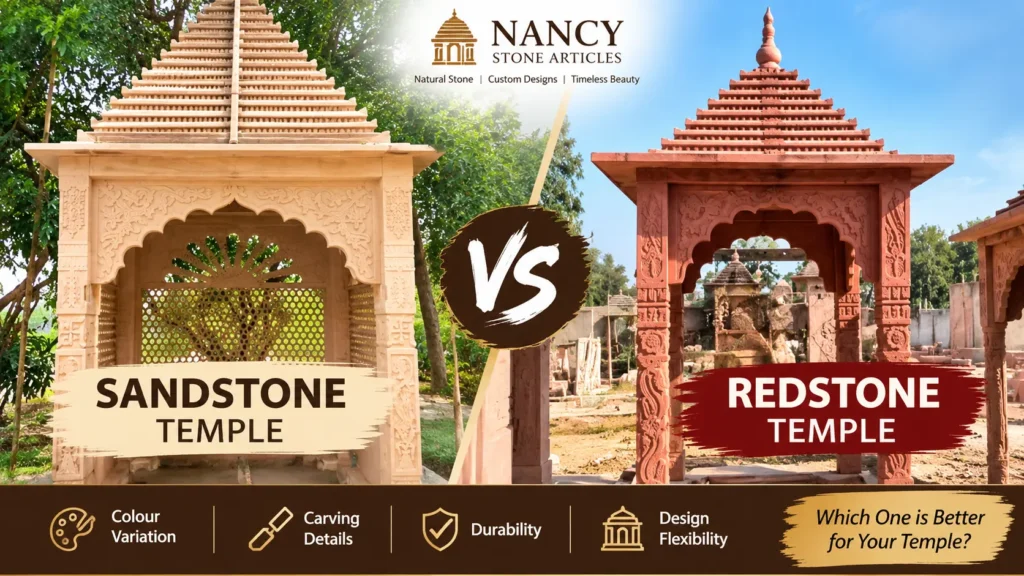
Sandstone vs Redstone Temple: Which Is Better for Your Temple?
Sandstone vs Redstone Temple is an important comparison when you are planning a new temple. The right stone can influence the temple’s colour, appearance, carving style and overall design.
Sandstone and red sandstone are both popular choices for temple construction. However, many people are not sure which option is right for their project.
The good news is that choosing between them does not have to be difficult. First, you need to understand the difference between the two. Then, you can match the stone with your temple design.
In this guide, Nancy Stone Articles explains Sandstone vs Redstone Temple, including colour, design, carving and important factors to consider before selecting your temple stone.
What Is a Sandstone Temple?
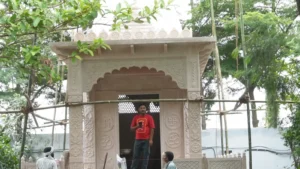
A sandstone temple is a temple made using natural sandstone for different architectural and decorative elements.
Sandstone has been used in Indian architecture for generations because of its natural appearance and versatility. Depending on the type and colour selected, sandstone can complement both traditional and contemporary temple designs.
It can be used for various parts of a temple, including:
- Temple walls
- Pillars and columns
- Entrance gates
- Steps and platforms
- Decorative panels
- Jali work
- Carved borders
- Temple facades
- Mandap structures
- Decorative architectural elements
One of the biggest advantages of sandstone is its flexibility. You can select a suitable stone according to the colour, style and visual requirements of your temple project.
What Is a Redstone Temple?
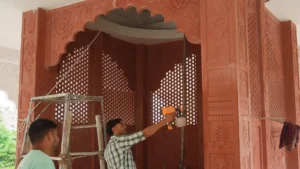
When people say redstone temple, they generally mean a temple constructed using red or reddish sandstone.
Red sandstone has a warm appearance that works particularly well with traditional Indian architectural styles. Its natural colour can give a temple a strong and elegant identity.
Red sandstone can be used for detailed architectural work such as:
- Temple pillars
- Carved entrances
- Decorative panels
- Traditional motifs
- Jali designs
- Borders and brackets
- Temple walls
- Custom stone elements
The final appearance depends on the quality, shade, finish and craftsmanship of the selected stone.
Sandstone vs Redstone Temple: What Is the Difference?
Before comparing the two, there is one important point to understand: red sandstone is a type of sandstone.
The term “sandstone temple” can describe a temple made from different types and colours of sandstone. In contrast, “redstone temple” usually refers to a temple made with red or reddish sandstone.
Therefore, the main difference is often the colour, appearance and design style, rather than two completely different types of natural stone.
Here is a simple comparison:
| Feature | Sandstone Temple | Redstone Temple |
|---|---|---|
| Stone type | Natural sandstone | Red or reddish sandstone |
| Colour | Depends on the selected sandstone | Mainly red or reddish |
| Appearance | Can range from subtle to bold | Warm, rich and traditional |
| Design | Traditional, modern or customised | Particularly suited to traditional designs |
| Carving | Suitable for architectural carving | Suitable for detailed traditional carving |
| Visual style | Depends on stone selection | Strong heritage-inspired appearance |
| Best for | Different design concepts | Traditional and distinctive temple designs |
Which Is Better: Sandstone or Red Sandstone?
There is no single answer for every temple project.
The best stone for a temple is the one that matches your design and project requirements.
First, consider the colour and architectural style you want. Next, look at the carving and finishing requirements. Finally, compare suitable stone options before making your decision.
For example, if you want a traditional temple with a warm and distinctive appearance, red sandstone can be an excellent option.
On the other hand, if your project requires a different natural colour or a more flexible design approach, another sandstone variety may be more suitable.
So, the better question is not only “Which stone is better?” but also:
“Which stone is better for my temple design?”
Why Is Sandstone Popular for Temple Construction?
1. Natural and Timeless Appearance
Natural sandstone has a unique texture and colour variation. As a result, it can add depth and character to temple architecture.
Its natural appearance works well with traditional Indian designs. At the same time, it can also complement modern architectural concepts.
2. Suitable for Detailed Stone Work
Temple architecture often includes decorative pillars, carved panels, borders and traditional motifs.
Depending on the selected stone and its properties, sandstone can be used for a wide range of carved architectural elements.
3. Flexible Design Options
Sandstone is not limited to one particular temple style. Therefore, it can work with many different design concepts.
It can be incorporated into:
- Traditional mandirs
- Residential temples
- Community temples
- Heritage-inspired structures
- Decorative temple entrances
- Custom architectural projects
4. Complements Traditional Architecture
Natural stone has an important place in Indian architecture. Because of this, sandstone can help create a temple with a traditional and timeless character.
At the same time, the design can be customised according to the requirements of the project.
Why Choose Red Sandstone for a Temple?
Red sandstone is a popular choice when colour and traditional appearance are important parts of the design.
Its warm reddish tone can create a bold visual effect. In addition, it can complement detailed carvings and traditional temple architecture.
Red sandstone may be suitable for customers looking for:
- Traditional temple designs
- Heritage-inspired architecture
- Custom carved pillars
- Decorative temple entrances
- Residential mandirs
- Community temples
- Large temple projects
However, the stone quality and craftsmanship are also important. A good design needs suitable stone, accurate carving and a proper finish.
Sandstone Temple Design: Important Things to Consider
Selecting the stone is only the beginning of a temple project.
Before finalising your order, consider these important factors.
Temple Size and Design
First, consider the size of your temple. The size can affect the amount of stone required and the complexity of the work.
A small home temple and a large community temple may need different planning and stone requirements.
Architectural Style
Next, decide whether you want a traditional, modern or heritage-inspired temple.
Your architectural style can influence the colour, finish, carving patterns and overall stone selection.
Stone Colour
Natural sandstone is available in different shades. Therefore, colour should be considered carefully when planning your temple.
If colour is an important part of your design, review actual stone samples before making a final decision.
Carving Requirements
If your design includes detailed pillars, jali work, religious motifs or decorative borders, discuss these requirements before production begins.
This step can help ensure that the final stone work matches your temple design.
Finish and Dimensions
Finally, decide the required thickness, dimensions and surface finish according to your project.
These details are especially important when stone components are manufactured according to architectural drawings.
Is Red Sandstone Good for Temple Construction?
Yes, red sandstone can be a suitable choice for temple construction when the stone quality, design and workmanship meet the requirements of the project.
However, choosing a red colour alone is not enough.
Before ordering red sandstone for a temple, consider:
- Stone quality
- Natural colour and shade
- Required dimensions
- Surface finish
- Carving details
- Design accuracy
- Installation requirements
- Quantity required
For this reason, it is better to discuss these requirements with an experienced stone manufacturer before production starts.
How to Choose the Right Stone for Your Temple
If you are planning a new temple and are confused about sandstone selection, follow these simple steps.
Step 1: Finalise Your Temple Design
First, start with the architectural concept.
You can use a drawing, 3D design, reference image or traditional temple design as a starting point.
Step 2: Decide the Desired Appearance
Next, think about the overall look you want.
Do you prefer a warm red appearance, a lighter natural stone look or another sandstone shade?
Step 3: Select the Required Stone
Once the design and appearance are clear, compare suitable sandstone options.
This comparison can help you select a stone that matches the visual style of your temple.
Step 4: Discuss Carving and Manufacturing
Then, share your drawings and dimensions with the manufacturer.
This allows the stone work to be planned according to your temple design.
Step 5: Check Samples and Finish
Finally, check the stone quality, colour and finish before large-scale production.
This helps you confirm that the selected material matches your expectations.
Sandstone Temple in Rajasthan
Rajasthan has a strong connection with natural stone and traditional stone craftsmanship.
Because of this, many customers look for sandstone temple work from Rajasthan. Working with an experienced local stone manufacturer can also make communication, customisation and project coordination easier.
At Nancy Stone Articles, we work with natural stone requirements for temple architecture and related stone products from our base in Sikandra, Rajasthan.
Whether you are planning a residential mandir or a larger temple project, discussing your design and stone requirements in advance can help you make a better decision.
Why Choose Nancy Stone Articles?
At Nancy Stone Articles, we understand that temple stone work is more than simply supplying stone.
Every temple project has its own design, dimensions, carving requirements and architectural vision.
Therefore, we focus on customised natural stone solutions according to individual project requirements.
Our temple-related stone work can include:
- Sandstone temple work
- Red sandstone temple elements
- Temple pillars
- Decorative stone work
- Carved stone designs
- Temple entrance structures
- Custom stone components
- Traditional architectural stone work
If you have a temple drawing, reference image or specific design requirement, our team can discuss your project. We can also help you understand the stone, carving and manufacturing requirements.
Sandstone vs Redstone Temple: Which One Should You Choose?
So, which one should you choose?
The answer depends on your temple design and project requirements.
Choose sandstone if you want flexibility in colour, design and architectural style.
Choose red sandstone if you want a warm red appearance and a traditional, heritage-inspired look.
Remember, red sandstone is a variety of sandstone. Therefore, the comparison is often more about stone colour, appearance and project suitability than two completely different materials.
In addition, the quality of the stone, precision of carving, craftsmanship and proper planning can make a major difference to the final result.
If you are comparing Sandstone vs Redstone Temple options for your project, start with your design and then select the stone that best matches your requirements.
Nancy Stone Articles can help you discuss your sandstone or red sandstone temple requirements and plan the right stone solution for your project.
Frequently Asked Questions
Is redstone the same as sandstone?
Redstone generally refers to red or reddish sandstone. In temple construction, the term “redstone temple” commonly means a temple made using red sandstone.
Which is better for a temple, sandstone or red sandstone?
Both can be suitable. The right option depends on your desired colour, architectural style, carving requirements, project location and stone quality.
Can sandstone be used for temple pillars?
Yes. Suitable sandstone can be manufactured and carved for temple pillars and other architectural elements according to the project’s design and dimensions.
Is red sandstone suitable for traditional temple designs?
Yes. Its warm natural colour can work well with traditional and heritage-inspired temple architecture.
How can I choose the right sandstone for my temple?
First, finalise your design and desired appearance. Next, compare suitable stone samples. Finally, discuss the required dimensions, carving and finish with an experienced stone manufacturer.
Can temple stone work be customised?
Yes. Temple stone components can be planned according to architectural drawings, dimensions, carving patterns and project requirements.
Where can I get sandstone temple work in Rajasthan?
Nancy Stone Articles in Sikandra, Rajasthan, can discuss sandstone and customised temple stone requirements based on your project design and specifications.
Plan Your Temple Project With the Right Stone
A temple is a long-term architectural project, so choosing the right stone deserves careful planning.
Whether you are considering a sandstone temple, red sandstone temple or customised temple stone work, start with your design. Then, select the stone that best matches your requirements.
Have a temple design or requirement? Contact Nancy Stone Articles today to discuss your project.
Good information for Sandstone vs Red sandstone temple
Thanks you for your feedback